
Bank of America Cash Rewards gets recommended a lot because it stays simple while still letting rewards match real spending habits.
The card at the center of most searches is the Customized Cash Rewards program, built around a 3-2-1 earning setup and a monthly category switch. Strong value shows up fastest when one spending lane dominates each month, like gas, dining, or the online shopping category.
Terms and offers can change, so the safest approach is treating the setup as a system: pick the best category, track the limit, and redeem rewards in a way that supports repayment.
How The Rewards Structure Works
A clean rewards structure matters more than flashy marketing, especially once everyday spending starts to repeat. This card runs on a 3% bonus lane, a 2% everyday lane, and a 1% baseline lane, then places a limit on the higher rates.
Base Earning Rates and The Quarterly Limit
Bank of America Cash Rewards follows a predictable pattern:
- 3% cash back applies to a single choice category selected for that month.
- 2% cash back applies automatically at grocery stores and wholesale clubs.
- 1% cash back applies to all other eligible purchases.
A single quarterly cap controls the bonus lanes. The 3% and 2% rates apply to the first $2,500 in combined purchases per quarter across the 3% and 2% categories. Spending above that combined limit earns 1% until the next quarter resets the counter.
First-Year Boost and The Standard Sign-Up Bonus
Some accounts include a first-year earning boost that raises the 3% lane to 6% and keeps the 2% lane at 2%, still under the same $2,500 combined quarterly limit.
Another widely advertised offer is an Online Cash Rewards Bonus that pays after at least $1,000 in purchases within the first 90 days of opening the account. Offer availability depends on application channel and current promotions, so checking the live offer terms at application time still matters.
Choice Category Options and What Usually Qualifies
Category selection is the biggest lever on this card, so accuracy matters more than enthusiasm. Merchant coding decides category placement, and the merchant’s code can differ from expectations even when the purchase feels obvious.
The Six Common Categories
Bank of America typically offers six options for the 3% lane:
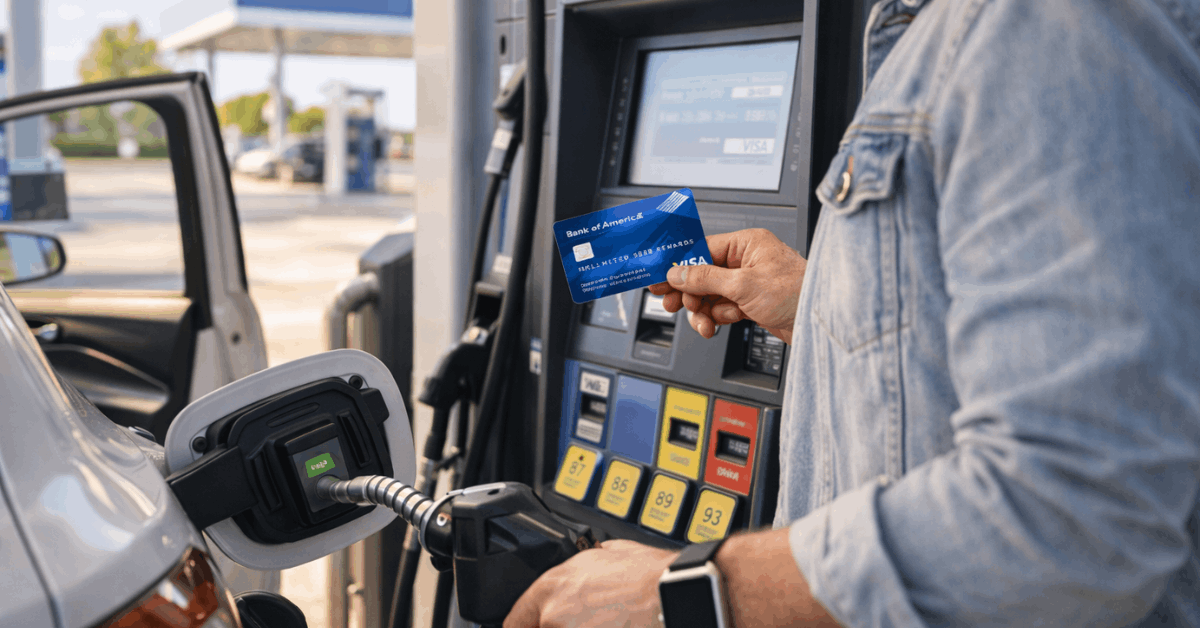
- Gas and EV charging stations
- Online shopping
- Dining
- Travel
- Drug stores
- Home improvement and furnishings
Gas and EV charging generally includes automated fuel dispensers, service stations, marinas, and dedicated EV charging networks. Dining tends to cover restaurants, fast food, bars, and many caterers. Travel can include airlines, hotels, cruises, car rentals, tolls, parking, and many forms of public transit.
Drug stores usually mean major pharmacy chains and similar merchants. Home improvement and furnishings commonly cover big-box home stores, furniture retailers, and some contractor-type merchants, depending on how the business codes transactions.
Online Shopping Rules That Trip People Up
Confusion shows up most often around the online shopping category. Online checkout through a website or app often qualifies, but certain in-store wallet transactions do not. A phone tap at a physical register can code like an in-store purchase even if the same merchant also sells online.
Subscription services, streaming, and telecom bills can qualify when processed as online transactions, yet category coding still depends on the merchant’s setup. Checking posted transactions in online banking after a few purchases provides the clearest reality check.
Category Selection Rules and Limits
Category control stays flexible, but the system has rules that affect outcomes. Timing and default settings matter, especially for new cardholders.
Changing Categories Monthly
A category change can be made once per calendar month through online banking or the mobile app. No change means the current selection stays in place.
A default category applies when no selection is made. Bank of America commonly defaults to gas and EV charging stations until a new selection is chosen.
Exclusions and Non-Reward Spend Types
Certain payments tend to fall outside the “online shopping” concept, even when paid online, such as tuition, utilities, insurance, and many medical services. Merchant coding also decides how wholesale clubs and grocery stores get treated, and edge cases exist for superstores and delivery services.
No expiration is a strong feature here, since cash rewards typically remain available as long as the account stays open and in good standing.

Preferred Rewards and What It Changes
A loyalty multiplier can turn an already-good cash-back structure into a high-rate engine, though it comes with balance requirements. Preferred Rewards boosts earnings by applying a percentage bonus on top of base rewards, rather than changing category rules.
Reward Boost Tiers At A Glance
Tier membership depends on qualifying balances held with Bank of America and Merrill accounts, measured over a set period.
| Preferred Tier | Bonus On Rewards | What 3% Becomes |
| Gold | 25% | 3.75% |
| Platinum | 50% | 4.5% |
| Platinum Honors | 75% | 5.25% |
Those boosted rates apply across the same categories and the same $2,500 combined cap for the 3% and 2% lanes. Redemption flexibility stays the same, so the real decision is whether keeping those balances aligns with broader financial goals.
Redeeming Cash Rewards Without Friction
Redemption options matter because unused rewards tend to become invisible. Redemptions on this card are designed to stay simple, and minimums tend to apply only to certain payout methods.
Common options include a statement credit, a direct deposit to an eligible Bank of America checking or savings account, or credits to eligible Merrill accounts. Some payout options, like a mailed check, may require a minimum threshold.
Automatic redemption can often be set once rewards reach a specified amount, commonly $25 or more, when depositing into eligible Bank of America or Merrill accounts. A set-and-forget approach helps if rewards are meant to offset monthly bills or fund savings goals.
Applying and Qualifying: What Typically Gets Checked
Approval is never guaranteed, and a clean application rarely fixes weak credit fundamentals. Still, preparation reduces avoidable errors that cause delays or declines.
A standard application flow includes:
- selecting the card,
- completing identity details,
- listing income and housing costs,
- Then accepting terms for a credit decision.
U.S.-issued Bank of America credit cards typically require a Social Security number or other acceptable taxpayer identification, plus a valid U.S. address. Applicants outside the U.S. often face a hard stop at the address and identity requirements, even when global access to the website makes the product easy to find.
Required documents vary, but identity verification often relies on government-issued ID, and income verification may be requested in edge cases. Credit history, existing debt load, and recent credit applications commonly influence outcomes.
Practical Ways To Get The Most Value
Smart use comes down to two habits: selecting the best category before spending happens, then staying inside the cap.
Spending projections help. A month heavy on commuting can favor gas and EV charging, while a month heavy on home purchases can favor home improvement and furnishings. Online-heavy spending can make the online shopping category the strongest pick, as long as the purchase code is entered correctly.
Quarter tracking matters. The $2,500 combined limit can be used up quickly when groceries and the 3% lane are both active, so checking year-to-date or quarter-to-date rewards progress in the app prevents surprise 1% earnings later in the quarter.
Full balance payments protect the rewards. Interest charges can erase cash back quickly, especially after any introductory APR period ends and the ongoing variable APR applies.
Last Thoughts
Bank of America Cash Rewards works best when it’s treated like a repeatable routine, not a one-time signup win. Category choice drives most of the upside, so picking the right lane early, watching the $2,500 quarterly cap, and confirming how purchases actually code keeps earnings predictable.
Add Preferred Rewards only if the balance requirement fits broader goals, then set redemption to run automatically so rewards don’t sit unused. Keep the fundamentals tight, too: pay in full, avoid interest drag, and the 3-2-1 structure stays genuinely valuable month after month.
Disclaimer
This site provides general information on credit cards and payment products, not financial, legal, or tax advice; always verify rates, fees, and terms with the issuing bank before applying.